Another winter hockey season is underway.
It’s also the time of the year when goalie parents begin to realize what their child’s coaches are or are not doing to improve their skill development.
Unfortunately, often times, nothing productive is being done during scheduled practice times.
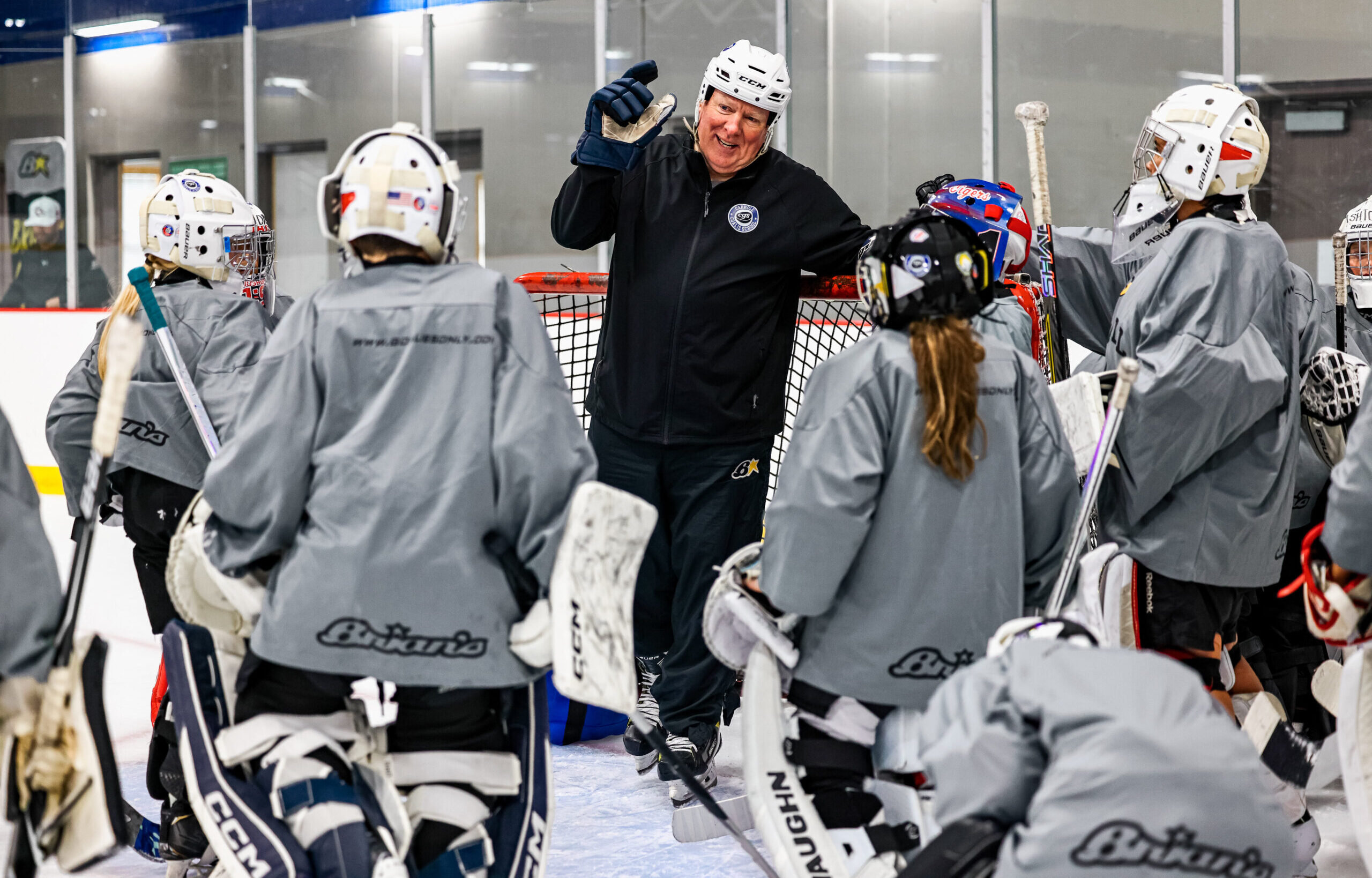
Some coaches believe that as long as their goalies are seeing lots of pucks during practices they are getting better. That’s not necessarily the case. Goalies need time to develop their individual skills in addition to being available to face shots during team drills.
Many coaches need to change the way they currently do business and improve on how they work with their goalies. Coaches need to break out of their comfort zone, so goalie development becomes a priority during every practice and not an after thought.
Sometimes coaches think they can skip-over goalie-specific training during the season and somehow the goalies will magically improve and become that much-needed difference-maker in big games. Unfortunately, it doesn’t usually work that way.
Some hockey associations hire outside coaches to work with their goalies for periods of time during the season. This is certainly a step in a right direction. However, the fact an association provides goalie training periodically is not an acceptable excuse for a team coach to ignore goalie development during practice time.
The reality is, goalies spend considerably more time on the ice with their team during a season than they do at any association goalie clinic. Constructive/productive use of a team’s practice time, in addition to any in-season goalie training programs, is the key to developing youth hockey goalies.
Figuring out how to coach goalies can sometimes be a challenging and intimidating aspect of the job for many coaches. However, it doesn’t have to be.
Here are some goalie coaching tips that can help:
- Assign someone to be the team’s goalie coach and encourage them to learn as much as they can about the position. Lots of resources available online.
- Stick to the basics, most goalies need to improve fundamental skills. Successful goalie development includes quality repetitions.
- Schedule 15-20 minutes of each practice hour for goalie coach to work with the goalies on individual skill development. Make sure to write this down on a practice plan so it doesn’t get forgotten.
- Give the goalie coach time and space to work on the ice. The individual skill development can take place at any time during practice. Successful team drills can be run without goalies in the net while they are working on their individual skills.
- Goalies are not shooting targets for players and coaches. They should be treated with respect. Coaches need to stop reliving their glory days as a player by blasting shots past their goalies to show their players are any parents watching that “they still have it.”
- Set up goalies for success. Control pace of team drills so they have time to get ready for each shot and into position to play rebounds.
- Encourage goalies to be leaders and not followers. For example, move them to front of the line during skating drills. They will skate harder, feel more a part of the team. Do not put them at end of the line because they skate slower than others.
- Teach goalies to treat every shot like it means something in practices and games and to be accountable for their effort and performance.
- If an association holds goalie clinics, make sure the goalies attend and strongly recommend that the team’s goalie coach also go – observing what is being taught, taking notes and/or helping out on the ice. Coaches should build on what’s being taught at the clinics during team practices.
- Encourage goalies to work on their puck handling and shooting skills.
- Pay attention to your goalies; make them feel like an important members of the team.
- Make sure your goalie gets a good pre-game warm-up with plenty of quality, stoppable shots.
- It’s always about stopping the next shot a goalie faces.
- Successful goalies compete, are consistent and play with confidence; build their confidence, improve their play, improve team’s win-loss record.
- Think carefully about pulling a goalie during a game for poor play, if possible make the change between periods. It’s less dramatic. Make sure someone on the coaching staff talks to the goalie who was removed from the game and explains why.
- Coaches should not be developing back up goalies. Kids sign up to play the game, not to sit on the bench. Look at developing a rotation where the goalies split games or split periods so they are involved in every game.
- Incorporate goalies into team drills— for example have them stop the puck behind net on breakouts and leave it for a teammate to pick it up or have them shoot puck ahead to teammate.
- Teach goalies to understand referee signals so they know when to head to bench on a delayed penalty.
- Encourage goalies to develop a post-goal routine so they do the same thing after every goal. They need to quickly analyze what just happened and refocus on what’s about to happen. This needs to be done before the puck is dropped at center ice. For NHL/PWHL goalies, their post-goal routines often revolves around the water bottle.
- Coaches need to control their reactions/emotions on bench when goalie gives up a goal. Goalies typically feel bad enough when they get scored on and it doesn’t help the situation when they look at bench and see coach upset and/or screaming at them.
- Be good to your goalies and chances are goalies will be good to your team.
Coach Steve Carroll is a goalie development leader who runs weekend clinics during the summer in Minnesota and Iowa. He coaches goalies at the youth, high school and college levels. He’s a two-time NCAA National Champion, two-time All-American, Hobey Baker Award Finalist, and Hall of Fame goalie at Edina (Minn.) High School and Minnesota State University, Mankato. Learn more about the Carroll Goalie School at www.carrollgs.com
